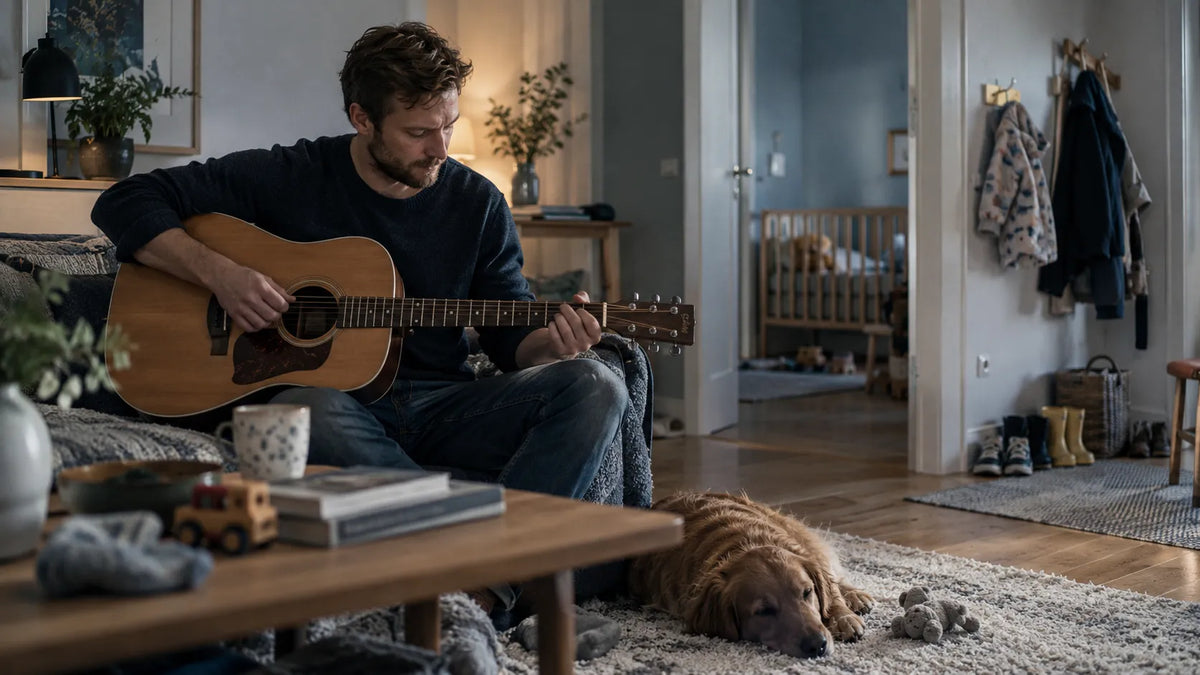
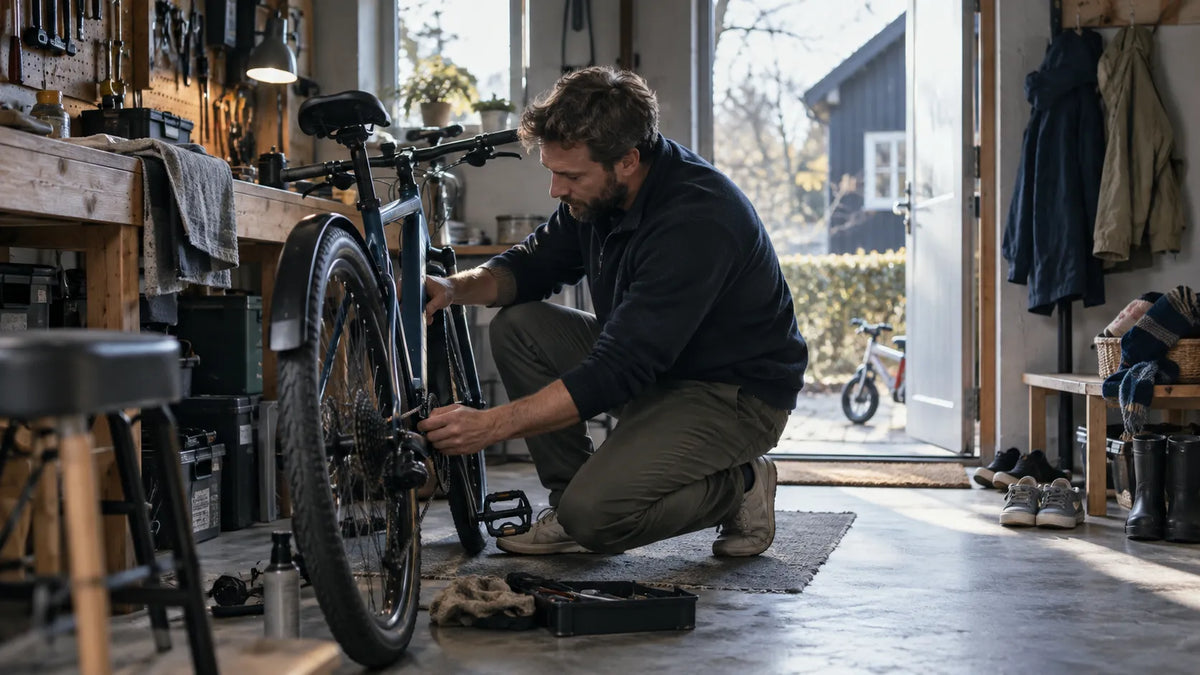
Maybe you used to be the funny one. Not because you consciously decided humour was part of your identity. You just spent enough time around friends who brought that side of you out.
Maybe you were competitive. You played sport twice a week and liked having somewhere to push yourself. Maybe you made things, read for hours, travelled, cooked properly, went to concerts or disappeared into a project because you wanted to know whether you could make it work. Maybe you were spontaneous. You could finish work on Friday and still have almost no idea what Saturday would look like.
Then you had children. You are still here. But many of the situations in which you used to recognise yourself may not be.
Maybe you haven't lost who you are. Maybe fewer parts of your current life give you access to that person.
That distinction will not explain every experience of feeling lost. But it gives you a much more useful place to look than simply asking:
Who am I anymore?
You meet different parts of yourself in different places
Think about how differently you can feel depending on where you are and who you are with. With one friend, you become ridiculous within five minutes. At work, you may be decisive and competent. During sport, you are competitive. With your partner, perhaps there is a playful version of you that almost nobody else sees. Alone, you might become reflective, creative or curious in ways that are difficult to access when other people need something from you.
None of these is necessarily the real you. They are different expressions of the same person in different contexts. That matters because identity is not experienced only as a list of beliefs about yourself. Much of it is lived.
Sometimes you recognise who you are through what becomes possible when you are somewhere, with someone or doing something.
When those contexts change, your access to familiar parts of yourself can change with them.
Children can change those contexts without anyone deliberately removing them
You probably did not sit down after becoming a father and decide:
Friendship matters less now.
Life simply became harder to coordinate. Nobody decided that you would stop reading. By the time the children are asleep, you may simply have enough attention left for twenty minutes of scrolling. You did not reject spontaneity as a value. Spontaneity became harder when leaving the house involves naps, meals, childcare, work and another adult's plans. You may still love sport. It now competes with bedtime. You may still value your relationship. Many conversations now need to cover logistics before anything else.
Parts of a life can disappear through accumulation rather than decision.
That is one reason the change can be difficult to notice. There was no final football match. No official last spontaneous weekend. No day when friendship ended. The frequency simply changed until something that once belonged naturally to your life became occasional — and then perhaps absent.
The missing activity may not be the thing you actually miss most
Suppose you keep thinking:
I really need to get back to the gym.
Maybe you do. But pause before making the gym the entire answer. What did training give you? Physical challenge? Progress? Time alone? Music in your headphones? A place where nobody needed anything from you? Confidence? Routine? Seeing friends?
The answer matters because what you miss may be broader than the activity.
An old activity can be the place where you remember a part of yourself, without being the only place that part can exist.
Perhaps five gym sessions no longer fit your life. But physical challenge still matters. Perhaps the band you played in is realistically over. Creativity may not be. Perhaps regular nights out with friends no longer fit. Friendship still might. This creates more possibilities than trying to reproduce your old schedule.
Some parts of you may now appear somewhere new
There is another side to this. Fatherhood does not only make old contexts less available. It creates new ones. Maybe you discover patience you did not know you had. A capacity to care deeply about someone else's experience. A ridiculous playfulness that only your child sees. A willingness to protect time differently. More courage around decisions that once frightened you. A different relationship with work. A new appreciation for home.
Perhaps you have become more reliable. More tender. More deliberate. Or simply interested in things you never expected to care about.
Feeling disconnected from familiar parts of yourself can happen at the same time as unfamiliar parts are becoming more visible.
You do not have to label all of that growth. Some changes may feel welcome. Others may not. The important point is that I have lost myself can hide both sides of the transition: what has become less available and what has begun to appear.
Access can disappear because capacity disappeared
There is a version of this problem where the activity technically remains possible. You could message your friend. The guitar is upstairs. The running shoes are by the door. There is even an hour after bedtime. But you do not want to do any of it. You want to sit down.
That can make the loss feel even more personal:
I used to want these things. What's happened to me?
Sometimes capacity belongs in the explanation. Poor sleep, sustained demands, fragmented attention and little opportunity for recovery can change what feels available at the end of the day.
Having time for something and having enough of yourself left for it are not the same thing.
That does not mean low capacity explains every loss of interest. But before concluding that an old part of you has disappeared, it is worth asking whether the conditions for accessing it are currently poor.
This is where Self meets Health & Vitality.
Relationships can hold parts of your identity too
Sometimes the person you miss existed partly between you and someone else. Think about an old friend. Perhaps you barely discuss anything serious together, but twenty years of shared history means there is a version of you that appears almost instantly when you meet. Or think about your partner before family logistics became so dominant.
Perhaps you used to flirt more. Be more spontaneous. Talk about ideas rather than schedules. Laugh at stupid things in bed. If that has changed, the experience may be larger than:
We need more date nights.
You may also miss who you were inside that relationship.
Sometimes we miss a relationship partly because we miss the version of ourselves that had room to exist inside it.
That does not mean another person is responsible for restoring you. It shows why Self and Partner cannot always be understood independently. Fatherhood happens inside relationships. So does identity.
Work can become one of the last places you still recognise yourself
This creates an interesting tension for some fathers. Home changes enormously after children. Work may change much less. At work, you still know the rules. You finish something and can see the result. People recognise your expertise. You have adult conversations. You may have autonomy that is harder to find at home with young children. That can make work feel unusually familiar. It does not necessarily mean you care about your career more than your family.
Sometimes the place that changed least becomes the place where the old version of you remains easiest to recognise.
That is useful information. It may help explain why switching off from work is difficult, why career setbacks suddenly feel unusually personal or why reducing work can feel more complicated than simply losing income. Again, we should not assume. But it is worth looking.
“Finding yourself” can become another impossible task
Once you decide you have lost yourself, the obvious next project is:
find yourself.
That can become surprisingly demanding. Get fit again. Reconnect with friends. Restart your hobbies. Figure out your purpose. Improve your relationship. Build a side project. Take better care of yourself. Now the life that already felt full contains another responsibility:
Become me again.
BRTLS takes a different approach.
You do not need to restore every missing part of yourself to prove that you still exist.
Some things may deserve returning. Some may need a different form. Some may genuinely belong to your past. And some of what matters most may not have existed before fatherhood at all. The task is not restoration for restoration's sake. It is discernment.
Start with what you miss, not what you think you should reclaim
There may be parts of your old life that looked important but do not actually call to you anymore. Maybe you used to go out every weekend. You do not miss it. Maybe career progression once mattered enormously. It matters less now. Maybe you travelled constantly and now genuinely prefer home. That is not evidence that fatherhood erased you. People change.
Something can have been genuinely yours once without needing to remain yours forever.
This is where nostalgia can mislead. The old version of you was real. He is not automatically the standard against which the current version should be judged. Ask what you actually miss. Not what a father should preserve to remain independent.
You may not need more separation from family — you may need more expression inside family life
When fathers talk about losing themselves, the obvious solution is often more time away. Sometimes that is exactly what is needed. But not always.
Perhaps what you miss is cooking creatively. That could happen at home. Perhaps you miss seeing friends. Sometimes they can enter family life rather than existing outside it. Perhaps you miss being physically active. That may take a different form now. Perhaps you miss curiosity. You may not need an entire free weekend for curiosity to reappear.
Making room for yourself does not always require removing yourself from the life you have built.
For now, the point is possibility. Do not assume the only route back to yourself leads away from responsibility.
The aim is access, not balance
You do not need equal amounts of time for: fatherhood; relationship; friends; work; interests; solitude; health; personal development. That would turn identity into another Wheel of Life. Some parts will dominate at different stages. A newborn may temporarily reorganise almost everything. A difficult work period may do the same. So might illness, caring responsibilities or a child who needs more support.
A part of you can matter without needing equal space in every season.
The useful question is whether something important has become inaccessible for so long that its absence is changing how your life feels. That is more specific than chasing balance. And more realistic.
TRY THIS
Map where you used to encounter yourself
Take the sentence:
I feel like I've lost myself.
Then make it more concrete.
1. Name three qualities you miss experiencing in yourself. Perhaps playful, curious, competitive, creative, social, calm, adventurous, competent or independent.
2. Identify where those qualities used to appear. Think in contexts: a particular friendship, sport, activity, relationship, place, routine or kind of time.
3. Ask what changed around those contexts. Was it time, energy, geography, childcare, work, priorities, money, access or simply that the activity stopped fitting?
4. Separate the context from the quality. Decide whether you miss the activity itself, what it allowed you to experience, or both.
5. Notice whether that quality appears anywhere else now. It may already exist in a new part of your life that you have not connected with your old sense of self.
6. Choose one realistic experiment. Instead of rebuilding the old context immediately, try one small way of giving a part that still matters somewhere to appear again.
The question is not only “What did I used to do?” It is “Who did I get to be there?”
That difference can completely change what you try next.
When the situation is different
Sometimes losing access is not the main issue. You may have plenty of opportunity for things you previously enjoyed and still feel little interest, pleasure or connection across most areas of life. Persistent low mood, hopelessness, severe anxiety, significant changes in functioning or thoughts of self-harm deserve appropriate professional attention rather than being reduced to an identity transition.
Constraints can also be very real. A single free hour may simply not exist right now. Money may be tight. Caring responsibilities may be substantial. Your child may need unusually high levels of support. BRTLS should not turn those realities into a personal failure to make time for yourself.
And sometimes an old context is genuinely unavailable. A friendship ended. Your body can no longer do the sport. You moved countries. Your circumstances changed permanently.
The question can still remain useful:
What mattered there — and does that part of you need the same place in order to exist?
Sometimes yes.
Sometimes no.
THE WIDER BRTLS PICTURE
You notice the problem in Self:
I've lost myself.
But look at where access changed.
Perhaps Work expanded. Perhaps Health & Vitality reduced what remains available after the day's demands. Perhaps Partner became mostly logistics. Perhaps Home absorbed more responsibility. Perhaps Community became thinner as friendships and shared activities became harder to maintain. Perhaps Children are simply in a stage that currently requires a great deal from you.
The experience is personal. The explanation may be distributed across your life.
Where you feel the loss is not necessarily where all of the lost access occurred.
That is why BRTLS uses Domains. Not to divide your life into boxes. To notice connections. And once those connections become visible, find myself again can become a much more useful question:
Where could something important about me realistically become accessible again?
RELATED READING
I Don't Feel Like Myself Since Becoming a Dad
For the wider transition when fatherhood has changed how you experience yourself.
Why Do I Miss My Old Life Even Though I Love Being a Dad?
When the strongest feeling is longing for something your previous life made possible.
Am I Still the Same Person After Becoming a Father?
When you are wondering whether you changed or simply live differently now.
Why Does Everything Feel Like It's About Work or Family Now?
When responsibility has narrowed the number of places where personal life can exist.
How Do I Make Space for Myself Without Pulling Away From My Family?
When you want more room for yourself but do not want family life to become the cost.
What If I Don't Know What I Want Anymore?
When the difficulty is no longer knowing which old or new parts actually matter.
MAYBE YOU ARE LOOKING FOR ACCESS, NOT A WAY BACK
I lost myself sounds final. As though there was a person. Then fatherhood happened. And now that person is gone. Real life may be more complicated.
The funny version of you may still appear when you finally see that friend. The competitive version may return the moment somebody suggests a race. Curiosity may appear when you have enough attention to follow something without interruption. The part of you that loves your partner rather than merely coordinating with them may still be there underneath a mountain of logistics. And there may be new parts you would never trade away.
You may not need to choose between the person you were and the father you became.
The more interesting work is deciding what still belongs. What changed for good? What became inaccessible? What emerged? What do you genuinely miss? And where could something important become possible again inside the life you have now?
Where did I used to encounter myself — and what happened to those places?
That question gives lost a location. And once something has a location, you have more possibilities than simply trying to become your old self again.
Your free Fatherhood Discovery helps you look across Self, Partner, Children, Health & Vitality, Work, Home and Community to understand where the life around you may have changed — and what that could mean for where you begin.
Start Your Free Fatherhood Discovery
Free · Personalised results included