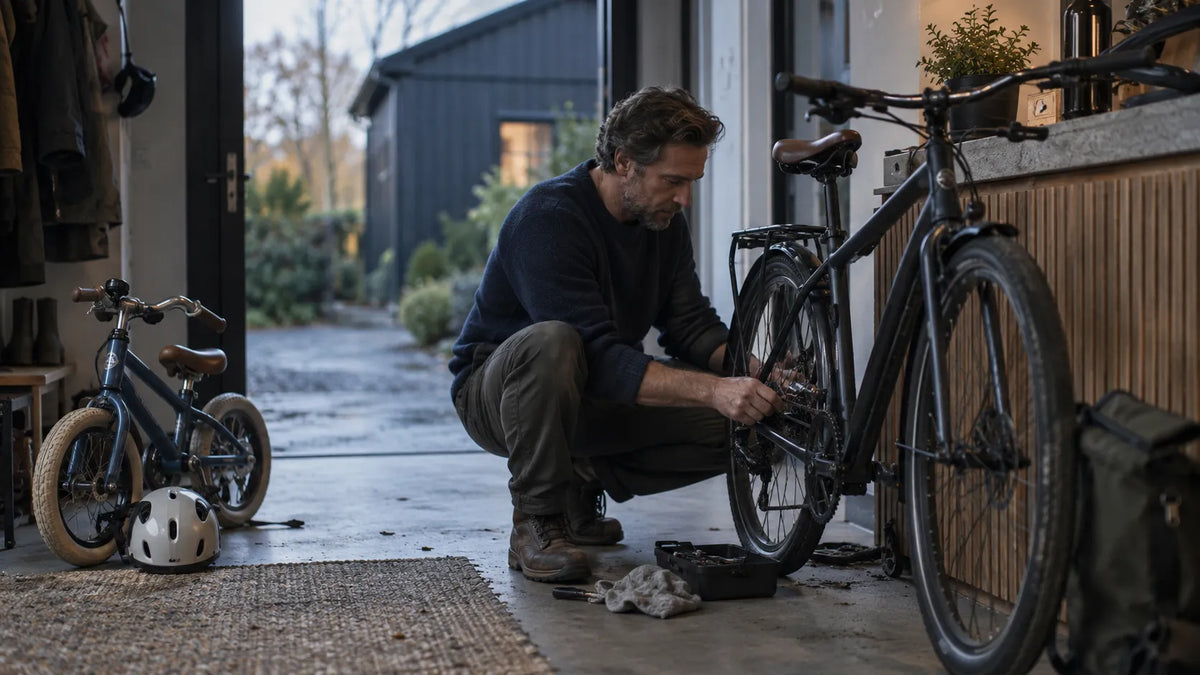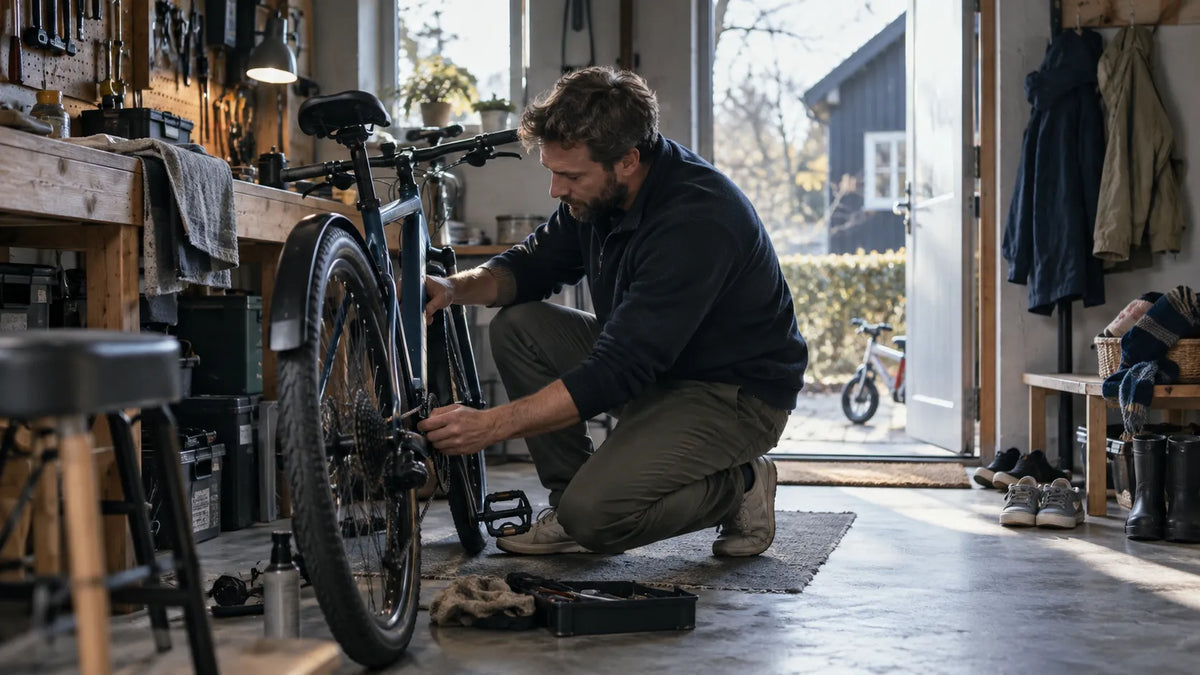
You love your children. You would not trade them for your old life. And still, every now and then, you catch yourself wondering:
Where did I go?
Perhaps nothing dramatic has happened. You go to work. You come home. You help with dinner, bedtime and everything that needs doing. You spend time with your partner. You see friends when schedules happen to align.
Life works.
But some of the things that once made you feel unmistakably like yourself have become harder to find inside it.
You used to train without negotiating three calendars first. You could spend an afternoon on something simply because you were interested in it. Conversations with your partner were not always about what needed organising. Your workday ended and the rest of the evening still felt open.
Maybe you were more spontaneous. More social. More ambitious. More relaxed. Or simply more able to hear your own thoughts.
Now you are a father.
And you may genuinely like who you are as a father while still not completely recognising the person living the rest of your life. Those experiences can coexist.
Missing parts of your old life is not the same as wanting your old life back.
Sometimes the more useful question is not how to find yourself again. It is what happened to the places where familiar parts of you used to live.
Fatherhood can change much more than your relationship with your child
Having children obviously changes what you do. There are new responsibilities, routines and relationships. Your time is no longer entirely yours to allocate. Decisions that once involved one or two people now affect a family. But the change can reach further than your schedule.
How you spend your evenings changes. How often you see friends may change. Your relationship may change. Sleep can change. Work may carry a different meaning when other people depend on your income. The amount of uninterrupted time available to think, recover or follow an interest can become smaller. Even your sense of what matters may shift.
This is one reason I don't feel like myself can be difficult to understand. There may not be one missing piece called identity.
The person has not changed separately from the life. The conditions in which that person gets to exist have changed too.
BRTLS calls attention to those conditions because trying to understand yourself without looking at the life around you can produce the wrong conclusion. You may decide I've lost myself when several familiar ways of experiencing yourself have simply become less available.
You may have lost access to something without losing the part of you it expressed
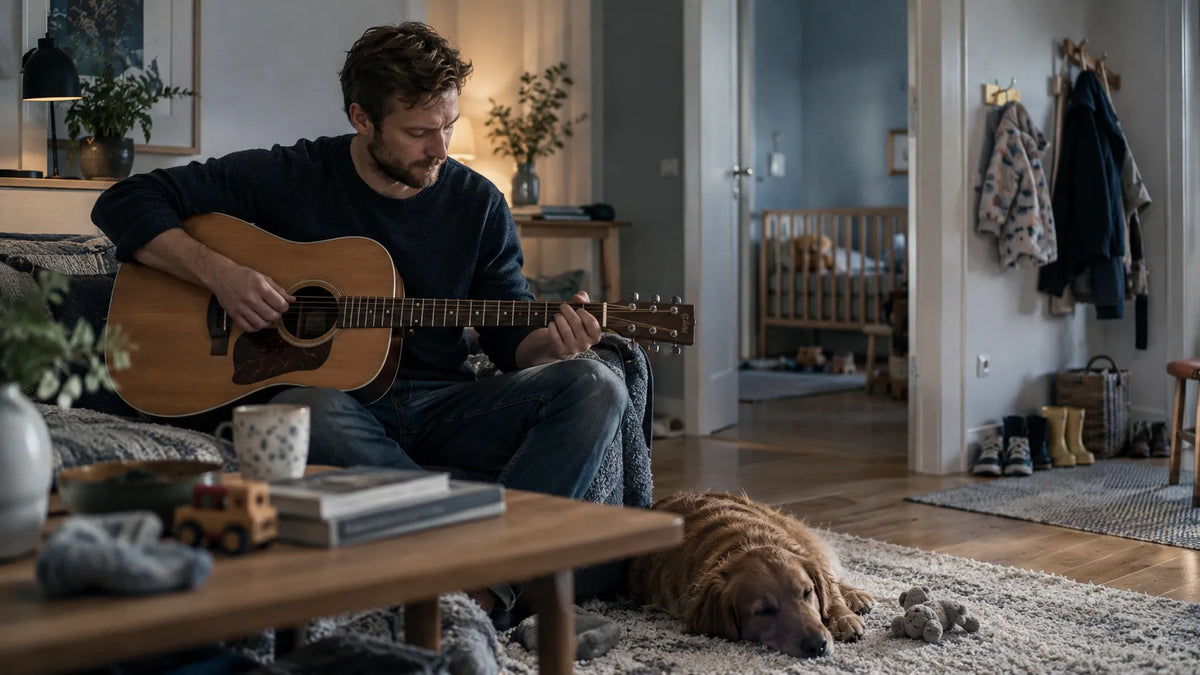
Imagine that music used to matter to you. You played guitar several evenings a week. Not professionally. Not because it improved your health. You simply liked disappearing into it for an hour. Then you had children. The guitar is still there. You still like music. But by the time the house is quiet, there are dishes to clear, messages to answer, things to prepare for tomorrow and perhaps a partner you have barely spoken to all day. Eventually you stop playing.
Years later, you might say: I used to be someone who played guitar.
But what exactly disappeared? Perhaps the interest did not. The regular conditions that allowed the interest to become part of your life did. That distinction matters.
Sometimes what feels like losing yourself is losing regular access to the places where parts of yourself used to appear.
The same can happen with friendship, sport, creativity, ambition, sexuality, humour, adventure, solitude or simply doing something without needing it to achieve anything. Not every old part needs to return. But before deciding that you have become a different person, it can be useful to ask which parts have actually changed and which have simply had less room.
Your old life does not need to have been better for you to miss something from it
This is where guilt can enter. You remember a Saturday morning before children. You woke up whenever you woke up. Maybe you trained, got coffee, saw friends or did absolutely nothing. Now Saturday starts at 06:12 because someone needs breakfast.
You look at your child and know, without hesitation, that you would choose this family again. And you still miss the freedom of that old morning. There is no necessary contradiction.
You can prefer the life you have and still miss something the life you had made possible.
Human beings do not evaluate major life changes as one package. You can gain something enormously meaningful while losing flexibility. Love fatherhood while missing spontaneity. Value responsibility while missing lightness. Feel more purpose and less freedom. Be happier about who is in your life while feeling less connected to some parts of yourself.
BRTLS does not need to decide which side is the real feeling. Both are information.
The problem with trying to “get the old you back”
When you do not feel like yourself, returning sounds attractive. Start training like you used to. See your friends every week. Get serious about that old project. Reclaim your time. Become yourself again. Some of that may genuinely help.But there is a problem with making the old version of you the destination. Your life is not the same. And perhaps neither are you.
Things that mattered at 28 may matter differently at 36. An ambition that once felt exciting may now feel less important. Something you barely valued before fatherhood may have become central.
The goal does not have to be recovering the person you were before your life changed.
You can bring something forward without rebuilding the world it came from. Maybe you do want music back. Maybe you discover you do not. Maybe what you actually miss is not the guitar at all, but having somewhere in your week where curiosity did not need to be useful. That is a different problem. And potentially a much more useful one.
Sometimes fatherhood becomes almost the only identity with room to be visible
You are Dad. At home, obviously. But perhaps fatherhood now influences where you live, how you work, what you spend, when you sleep, who you see and what you plan for. You may also be a partner, colleague, friend, brother, son, athlete, maker, musician, reader, traveller, volunteer or someone who likes sitting alone with coffee for forty minutes. Those parts do not have to compete with fatherhood. But they do need somewhere to exist if they still matter.
Being deeply committed to fatherhood does not require fatherhood to become the only way you recognise yourself.
That does not mean constructing an artificially balanced identity where every role gets equal time. Real life does not work like that. Some seasons will be dominated by caregiving. Others by work. Health. A new baby. A struggling child. A family transition. The question is not whether every part of you receives equal space. It is whether the parts that still matter have become so absent that your life no longer feels inhabited by you.
Responsibility can quietly make a life feel narrower
There is something particularly interesting about responsibility. A responsible life can be a good life.
You work because people depend on you. You organise because something needs organising. You keep commitments. You show up. None of that is the problem. But responsibility has a way of arriving with deadlines. Personal interests often do not.
The school form needs completing tonight. Your curiosity about photography does not. The child needs collecting at 15:15. Your friend can probably wait another week. The mortgage needs paying. That book can stay unread.
What matters personally can slowly lose space to what matters urgently without anyone ever deciding that it matters less.
After enough repetition, the week may contain almost nothing that is there because you were drawn toward it. For now, notice the distinction. A life can be full without containing much room that feels personally yours.
Your relationship with yourself is also changing while you are learning to be a father
Fatherhood can expose things about you. Your patience. Your limits. How you respond when plans disappear. How much control you like. What happens when someone needs you while you are depleted. What kind of partner you become under pressure. What you value enough to protect. What you are willing to let go.
Sometimes that can be uncomfortable because the father you imagined yourself becoming and the father you meet in ordinary life are not identical. Perhaps you thought you would be endlessly patient. Then you hear your own irritated voice at bedtime. Perhaps you assumed family would automatically make work feel less important. It does not. Perhaps you expected to feel completely fulfilled. You still want things that have nothing to do with parenting. None of that gives a final verdict on who you are.
Fatherhood does not only add a role to your identity. It creates situations in which you discover more about the person carrying that role.
That discovery can be part of development without turning every difficult moment into evidence that you need fixing.
Not feeling like yourself can also be about capacity
Sometimes the explanation is less philosophical. You are exhausted. Your attention is fragmented. There has been little recovery. Work remains in your head. Your evenings are almost entirely functional. When capacity becomes low, activities and relationships that once brought out familiar parts of you may become harder to access. The person who jokes with friends may still be there. He may also be too tired to go. The person who enjoys building things may still exist. He may not have enough uninterrupted attention to start.
Before deciding that your personality has disappeared, it can be worth asking what your current life gives that personality enough capacity to do.
This does not mean every identity concern is really sleep deprivation. It means Health & Vitality, Work, Partner, Home and Self can interact. Where you notice the problem is not necessarily the only place contributing to it.
There is no correct amount of “you” to preserve
This is another place where personal-development advice can become unhelpful. You do not need: one night a week for yourself; a hobby; a boys' trip; a morning routine; a side project; or a certain number of hours of me time to remain psychologically authentic. Some fathers want substantial independent interests. Others genuinely prefer most of their discretionary time to involve family. Neither tells us by itself whether something is wrong.
The useful question is not whether you have enough independence by someone else's standard. It is whether the way you are currently living fits what matters to you.
Difference is information before problem. That applies between fathers too.
Making room for yourself is not the same as putting yourself first
Suppose you realise you badly miss training. That matters. It does not automatically mean:
I need five gym sessions a week again and everyone else will have to adapt.
Your life contains other people. Their capacity matters. Shared responsibilities matter. Constraints matter. But your own experience belongs in the picture too.
Having a need does not automatically decide what should happen next. Ignoring that need does not make it disappear either.
BRTLS is interested in what can realistically fit. Perhaps three sessions become two. Perhaps mornings work better than evenings. Perhaps what you miss is not training frequency but physical challenge. Perhaps another activity fits this stage of life better. Agency exists within constraints. That is not compromise as failure. It is development happening in an actual life.
TRY THIS
Look for what became harder to reach
Do not begin by asking Who am I? That question is enormous. Start with something you can actually inspect.
1. Think of three moments from life before fatherhood when you felt recognisably like yourself. Focus on what you were doing, who you were with and what was available to you in those moments.
2. Ask what each moment allowed to appear. Perhaps it was curiosity, humour, competence, friendship, physical challenge, creativity, independence, calm or spontaneity.
3. Separate the activity from what it gave you. If you miss football, for example, you may miss football itself — or competition, friendship, physical intensity or having one predictable part of the week that was yours.
4. Notice what changed. Did the part of you disappear, or did time, energy, access, priorities or circumstances change around it?
5. Decide what still matters now. You do not need to restore everything. Choose one part that still feels worth making visible in your current life.
6. Look for the smallest realistic expression of it. Not How do I get my old life back? but Where could this part of me exist in the life I have now?
You are not reconstructing an old identity. You are finding out what still deserves room in the person you are becoming.
When the situation is different
Sometimes I don't feel like myself describes more than an ordinary life transition. Persistent low mood, loss of interest or pleasure across most of life, severe anxiety, hopelessness, major changes in functioning or thoughts of self-harm deserve appropriate professional attention rather than being explained away as a normal part of fatherhood.
Sometimes the problem is also structural. There may genuinely be almost no discretionary time because of caregiving, financial pressure, illness, work or other constraints. Personal development cannot manufacture resources that do not exist. The useful question then becomes what agency is realistically available within those conditions, not how to optimise your way out of them.
And sometimes you discover that you do not actually miss an old part of yourself. You simply thought you were supposed to preserve it. That is information too.
Development can include keeping something, changing something or deciding that something no longer needs to come with you.
THE WIDER BRTLS PICTURE
You notice:
I don't really feel like myself anymore.
That is visible in Self.
But BRTLS would not assume Self is where the whole explanation lives.
Perhaps Work takes more mental space than it used to. Perhaps Health & Vitality leaves little capacity for the activities and relationships that used to bring you alive. Perhaps Partner has become dominated by logistics, leaving less room for the version of you that existed inside that relationship. Perhaps Home contains responsibilities that have quietly expanded. Perhaps Children are currently at a stage that genuinely asks for more of you.
And perhaps nothing is fundamentally wrong.
You may simply be inside a transition where the old arrangement no longer fits and the new one has not yet become familiar.
That is why BRTLS asks:
Who am I becoming?
Not:
How do I get back to who I was?
Fatherhood is now part of your life
RELATED READING
Why Do I Feel Like I've Lost Myself Since Having Children?
When the feeling of personal disappearance is the part you most want to understand.
Why Do I Miss My Old Life Even Though I Love Being a Dad?
When missing freedom or your previous life brings guilt with it.
Am I Still the Same Person After Becoming a Father?
When you are trying to understand what changed and what remained.
Why Does Everything Feel Like It's About Work or Family Now?
When almost every part of life seems organised around responsibility.
How Do I Make Space for Myself Without Pulling Away From My Family?
When you know something needs room but do not want that room to come at the expense of the people you love.
Who Am I Becoming as a Father?
When the question has shifted from what you lost toward what you are building.
YOU DO NOT NEED TO GO BACK TO FIND YOURSELF
Maybe you will bring some old things back. A sport. A friendship. Music. Travel. Quiet. Ambition. Maybe you will not. Some parts of your previous life may have belonged to a season that really is over. Others may still matter deeply but need a different shape. And completely new parts of you may be appearing because you became a father.
The person you were before fatherhood does not have to disappear. He also does not have to become the blueprint for who you should be now.
There is another possibility. Keep what still matters. Let some things change. Discover what has become important. Make realistic room for parts of yourself that have become difficult to reach. And allow fatherhood to be one of the places where you continue becoming a person, rather than the moment when that process stopped.
So if you find yourself thinking:
I don't feel like myself anymore.
Try changing the question.
Not:
Where did I go?
But:
What has become harder to reach — and does it still deserve a place in my life now?
That question does not assume you are lost. It gives you somewhere to begin.
Your free Fatherhood Discovery helps you step back and look across Self, Partner, Children, Health & Vitality, Work, Home and the wider picture of your life — so you can understand what is happening before deciding what might help.
Start Your Free Fatherhood Discovery
Free · Personalised results included